
An echocardiogram is one of the most important and versatile studies in cardiology. Using ultrasound (high-frequency sound waves), it allows visualization of the heart in real time, evaluating its structure, function, and blood flow without pain or radiation.
How does it work?
An echocardiogram uses a transducer (probe) placed on the patient's chest. This device emits ultrasound waves that bounce off the heart's structures and create detailed images on a screen. It is completely safe, painless, and does not use radiation.
What can it detect?
- ●Size and thickness of the heart walls
- ●Pumping function (ejection fraction)
- ●Valve condition (stenosis or regurgitation)
- ●Heart wall motion
- ●Fluid around the heart (pericardial effusion)
- ●Blood clots inside the heart
- ●Congenital heart defects
- ●Pressures within the heart chambers
When is an echocardiogram indicated?
- ●Suspected heart failure
- ●Heart murmurs detected on examination
- ●Follow-up of valve diseases
- ●After a heart attack to assess damage
- ●Hypertension to detect heart damage
- ●Evaluation of arrhythmias
- ●Monitoring of pacemaker patients
- ●Preoperative evaluation
How to prepare
Preparation is very simple. No fasting or special preparation is required. You just need to wear comfortable clothing that allows access to the chest area. The study takes between 20 and 40 minutes.
What happens during the study?
You will lie on a bed, slightly tilted to your left side. The specialist will apply conducting gel to your chest and move the transducer in different positions to obtain various views of the heart. You can see the images on the screen in real time.
At ElderCardio, we have state-of-the-art echocardiography equipment. Dr. Jimenez interprets the results immediately to provide you with an accurate diagnosis on the same day as your study.
Results
One of the advantages of an echocardiogram is that results are available immediately. The cardiologist will explain the findings during the same visit and, if necessary, adjust your treatment or order complementary studies.
If your doctor has recommended an echocardiogram, or if you have symptoms such as shortness of breath, chest pain, or palpitations, contact us to schedule your study. Early detection is key to effective treatment.
Disclaimer: This article is for informational purposes only and does not replace professional medical consultation. Always consult a qualified cardiologist for diagnosis and treatment of heart conditions.
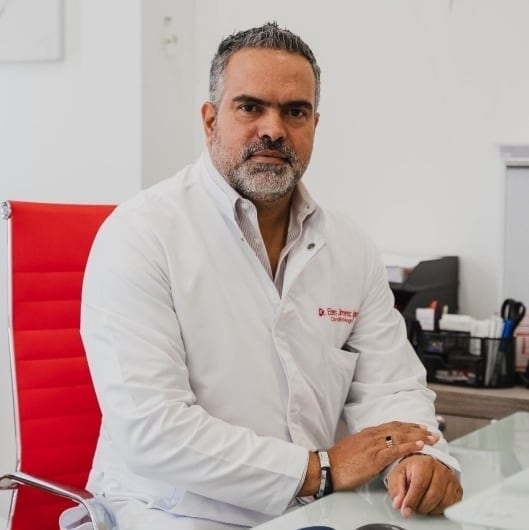
Dr. Elders Jimenez Iglesias
Cardiologist · Nuclear Cardiology
Professional License: 13819257 · Specialty: 12543211
Have questions about your heart health?
Schedule a personalized evaluation with Dr. Jimenez. Board-certified cardiologist with expertise in nuclear cardiology.