
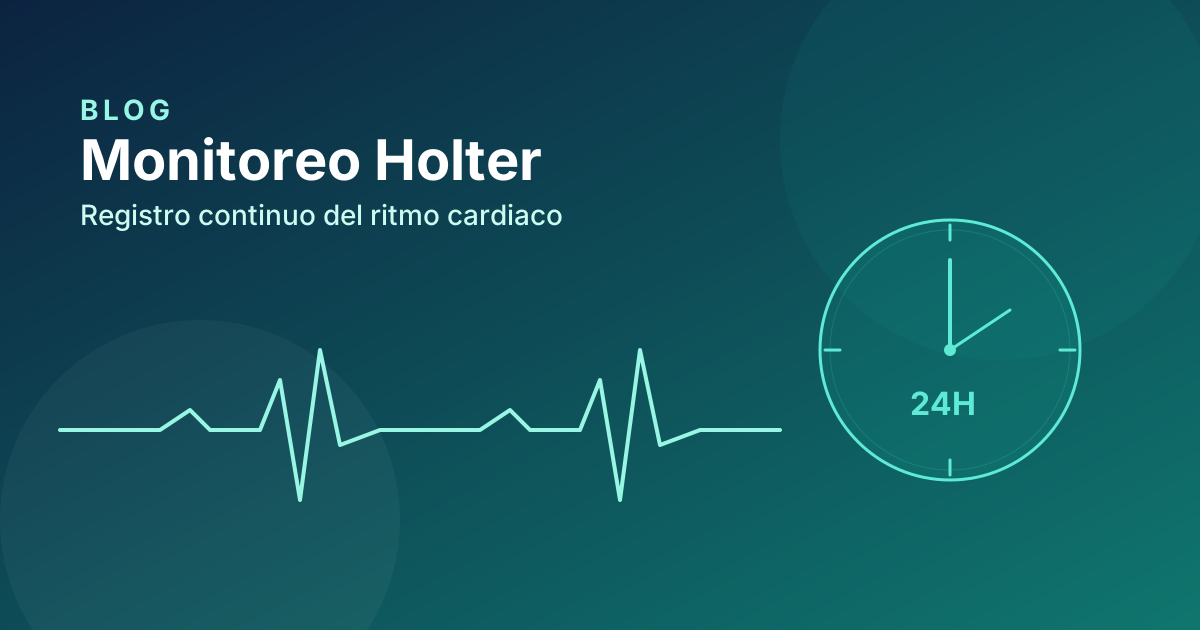
The 24-hour Holter monitor is an ambulatory cardiac study that continuously records the electrical activity of your heart for a full day while you carry out your normal activities. Unlike the conventional electrocardiogram that captures only a few seconds, the Holter monitor can detect heart rhythm abnormalities that occur intermittently and could be missed on a standard ECG.
What is a Holter monitor and how does it work
The Holter monitor is a small portable device, roughly the size of a cell phone, that connects to the patient's chest via adhesive electrodes. The device records every heartbeat over 24 hours, storing thousands of beats that the cardiologist subsequently analyzes with specialized software. It was invented by biophysicist Norman Holter in the 1960s and has since become an indispensable tool in cardiology.
Who needs a Holter monitor
The cardiologist orders this study when information beyond what a conventional ECG can provide is needed, since the ECG is an instantaneous test. The most common indications include:
- ●Frequent or episodic palpitations not captured on the office ECG
- ●Recurrent dizziness or fainting episodes (syncope) of undetermined cause
- ●Evaluation of known arrhythmias such as atrial fibrillation, tachycardias, or frequent premature beats
- ●Monitoring the effectiveness of anti-arrhythmic medications
- ●Assessment after a heart attack or cardiac surgery
- ●Investigation of atypical chest pain that may originate from arrhythmias
- ●Evaluation of pacemaker patients to verify device function
- ●Assessment of unexplained fatigue or intermittent shortness of breath
How to prepare for the Holter
Preparation is straightforward, but there are important aspects to consider:
- ●Shower and thoroughly wash the chest area before electrode placement, as you will not be able to get wet during the study
- ●Do not apply creams, oils, or lotions to the chest
- ●Wear comfortable, loose-fitting clothing; a cotton T-shirt or blouse is ideal
- ●Take your usual medications unless the cardiologist instructs otherwise
- ●Keep an activity and symptom diary that we will provide
- ●Avoid electric blankets and metal detectors during monitoring
What happens during the 24 hours of monitoring
Once the Holter monitor is placed at the office, you can go home and continue with your usual routine. It is important to maintain your normal activities so the recording reflects real-life situations:
- ●Carry on with your daily activities normally: work, walk, do moderate exercise, eat, and sleep
- ●Each time you feel a symptom (palpitations, dizziness, chest pain, shortness of breath), press the marker button on the device and note in your diary the time, symptom, and what you were doing
- ●Avoid getting the device and electrodes wet; you cannot shower or bathe during the period
- ●Sleep as usual; the device is small enough not to interfere with sleep
- ●Return to the office the following day so the monitor can be removed and data downloaded
How Holter results are interpreted
The Holter software analyzes each of the approximately 100,000 beats recorded in 24 hours. The cardiologist reviews the complete report paying special attention to:
- ●Minimum, maximum, and average heart rate during day and night
- ●Presence of arrhythmias: atrial fibrillation, atrial flutter, supraventricular or ventricular tachycardias
- ●Premature beats: quantity, type (atrial or ventricular), and whether they occur in runs
- ●Cardiac pauses: moments when the heart takes too long to beat
- ●Correlation between symptoms recorded by the patient and what the tracing shows at that exact moment
- ●ST segment changes that may suggest cardiac ischemia
Common Holter findings
It is normal to find a certain number of isolated premature beats, heart rate variations with activity and sleep, and even brief pauses during deep sleep. The cardiologist determines which findings are normal and which require treatment or additional studies such as an echocardiogram or stress test.
Difference between a Holter and an event monitor
While the Holter records continuously for 24-48 hours, event monitors are worn for longer periods (weeks) and record only when the patient activates the device upon feeling symptoms. The cardiologist determines which study is more appropriate based on symptom frequency. If symptoms occur daily, the 24-hour Holter is usually sufficient. If episodes are sporadic, an event monitor may be more useful.
Holter monitoring is completely safe, painless, and does not interfere with your daily activities. It is the best tool for catching arrhythmias that an office ECG cannot detect due to their intermittent nature.
Holter monitoring in Cancun
At Dr. Elders Jimenez Iglesias's office in Hospital Galenia, Cancun, we perform 24-hour Holter monitoring with high-resolution digital equipment. Placement and removal are done at the office, and results are personally interpreted by the specialist to provide you with an accurate diagnosis.
If you experience palpitations, dizziness, or any symptoms suggesting heart rhythm disturbance, Holter monitoring can reveal the cause. Schedule your appointment with Dr. Jimenez Iglesias at (998) 116-3657 and get the answers you need about your cardiac health.
Disclaimer: This article is for informational purposes only and does not replace professional medical consultation. Always consult a qualified cardiologist for diagnosis and treatment of heart conditions.
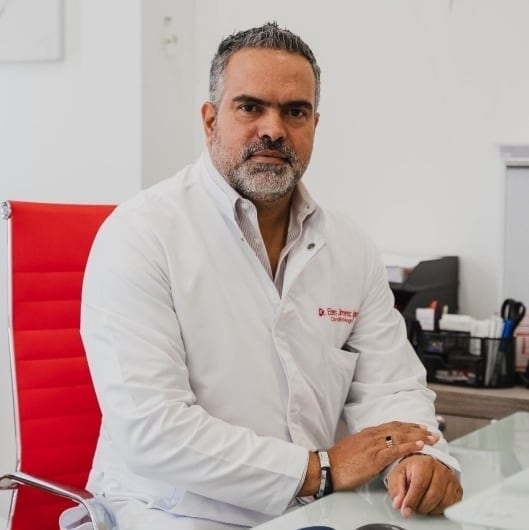
Dr. Elders Jimenez Iglesias
Cardiologist · Nuclear Cardiology
Professional License: 13819257 · Specialty: 12543211
Have questions about your heart health?
Schedule a personalized evaluation with Dr. Jimenez. Board-certified cardiologist with expertise in nuclear cardiology.