

Visiting a cardiologist for the first time can be uncertain. Many patients wonder what to expect, whether any test will hurt, or whether they will receive bad news. The reality is that the first cardiology consultation is a calm, informative, and extremely valuable experience for your health. Being prepared will help you make the most of every minute with the specialist. Dr. Elders Jimenez Iglesias at Hospital Galenia, Cancun, is dedicated to making your first consultation clear, comprehensive, and stress-free.
What to bring to your first cardiologist appointment
- ●Valid photo identification and insurance information if applicable
- ●Complete list of all medications you currently take, including vitamins, supplements, and natural remedies, with doses and schedules
- ●Recent blood test results (ideally from the last 3 months): glucose, total cholesterol, HDL, LDL, triglycerides, glycosylated hemoglobin if diabetic, and kidney function
- ●Previous cardiac studies if available: electrocardiograms, echocardiograms, stress tests, Holter monitors
- ●Referral note from your primary care doctor or another specialist if you were referred
- ●A log of your blood pressure readings if you measure regularly at home
- ●A written list of your symptoms as precisely as possible: when they started, how often they occur, what triggers them, and what relieves them
What happens during the first consultation
The consultation begins with a detailed interview where the cardiologist will ask about your current symptoms, your personal medical history, your family history of heart disease (especially if any first-degree relative had a heart attack, coronary artery disease, or sudden death before age 55 in men or 65 in women), your lifestyle habits such as diet, exercise, smoking, and alcohol consumption, and your stress level. This interview is the most important part of the consultation because it allows the cardiologist to understand your complete context.
The cardiovascular physical examination
After the interview, the cardiologist will perform a physical examination focused on the cardiovascular system. This includes blood pressure measurement in both arms, heart auscultation with a stethoscope to detect murmurs, abnormal rhythms, or additional sounds, lung auscultation to look for signs of congestion, pulse palpation at different points on the body (neck, wrists, feet) to evaluate peripheral circulation, inspection of the legs for swelling (edema), and evaluation of the neck veins (jugular venous distension). The physical examination is completely painless and takes approximately 10 minutes.
Tests that may be performed at the first visit
- ●Electrocardiogram (ECG): routinely performed at most first visits. It is quick (less than one minute), painless, and provides immediate information about the heart's rhythm and electrical conduction
- ●Echocardiogram: if the cardiologist detects relevant findings during the physical exam or if your symptoms warrant it, an echocardiogram may be performed during the same visit. This study uses ultrasound to visualize the heart in motion, measure its size, evaluate the valves, and calculate the ejection fraction
- ●Pulse oximetry: a non-invasive measurement of blood oxygen level using a finger sensor
Important questions to ask your cardiologist
Take advantage of your first consultation to resolve all your questions. Here are key questions to consider:
- ●What is your overall assessment of my heart health
- ●Do I need any additional tests and why
- ●Are my current medications appropriate or do they need adjustment
- ●What symptoms should I watch for and which ones require emergency attention
- ●What type of exercise is safe for me and at what intensity
- ●Do I need to modify my diet in any specific way
- ●How often should I return for follow-up appointments
- ●Do my family history factors represent a significant risk for me
After the first consultation
At the end of the consultation, the cardiologist will explain the findings, provide a preliminary or definitive diagnosis, and establish an action plan. This may include ordering complementary studies such as specific blood tests, stress test, or Holter monitoring; adjusting or starting medications; personalized lifestyle recommendations; and scheduling your next follow-up appointment. Make sure you understand every instruction before leaving. A good cardiologist takes the time to explain everything clearly and answer all your questions.
Dr. Elders Jimenez Iglesias, cardiologist at Hospital Galenia, Cancun, dedicates the necessary time to each first consultation to thoroughly understand your case, perform the appropriate tests, and design a personalized plan to care for your heart. Your first appointment includes an electrocardiogram with immediate interpretation. Schedule at (998) 116-3657.
Disclaimer: This article is for informational purposes only and does not replace professional medical consultation. Always consult a qualified cardiologist for diagnosis and treatment of heart conditions.
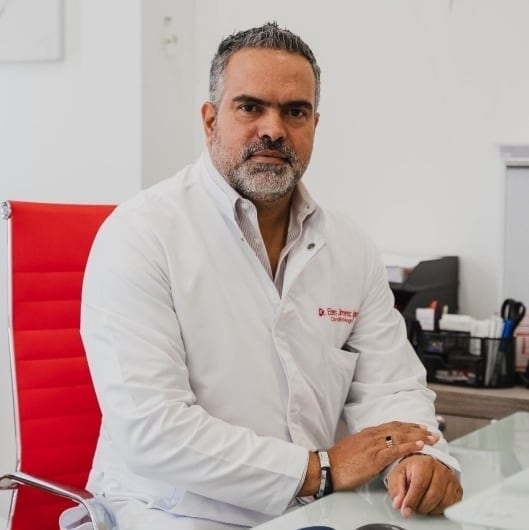
Dr. Elders Jimenez Iglesias
Cardiologist · Nuclear Cardiology
Professional License: 13819257 · Specialty: 12543211
Have questions about your heart health?
Schedule a personalized evaluation with Dr. Jimenez. Board-certified cardiologist with expertise in nuclear cardiology.