

Cardiology is one of the fastest-advancing medical specialties. In 2026, the convergence of artificial intelligence, medical-grade wearable devices, new evidence-based clinical guidelines, and innovative pharmacological therapies is transforming how we diagnose, treat, and prevent cardiovascular disease. In this article, we review the most relevant developments of the year and how they integrate into Dr. Elders Jimenez Iglesias's cardiology practice in Cancun.
New clinical guidelines: what is changing in cardiovascular management
International cardiology societies have updated several key clinical guidelines in 2025-2026. The European Society of Cardiology (ESC) and American Heart Association (AHA) guidelines have refined treatment thresholds for hypertension, emphasizing stricter control in high-risk patients with systolic blood pressure targets below 130 mmHg. Dyslipidemia management guidelines now recommend a more aggressive approach with LDL cholesterol targets below 55 mg/dL for patients at very high cardiovascular risk. Atrial fibrillation guidelines reinforce early anticoagulation and rhythm control strategy in younger patients.
Artificial intelligence in cardiology: from the lab to the clinic
Artificial intelligence has moved beyond being a future promise to become a real clinical tool. FDA-approved AI algorithms now assist in electrocardiogram interpretation, detecting atrial fibrillation, prolonged QT intervals, and subtle signs of hypertrophic cardiomyopathy with accuracy comparable to experienced cardiologists. In echocardiography, AI automates ejection fraction and myocardial strain measurements, reducing inter-operator variability. Clinical decision support systems integrate data from multiple sources to calculate cardiovascular risk with greater precision than traditional scales.
Wearable devices: continuous cardiac monitoring
Wearable devices have evolved from simple step counters to clinically relevant cardiac monitoring tools. Latest-generation smartwatches can record single-lead electrocardiograms, detect atrial fibrillation, measure oxygen saturation, monitor sleep patterns, and estimate heart rate variability. Some devices now have regulatory approval for continuous cuffless blood pressure monitoring.
- ●Single-lead wrist ECG with automatic atrial fibrillation detection
- ●Continuous pulse oximetry with nocturnal desaturation alerts
- ●Cuffless blood pressure monitoring via advanced photoplethysmography
- ●Physical activity tracking with personalized goals by cardiac condition
- ●Sleep apnea detection through respiratory pattern analysis
- ●Direct integration with electronic medical records for remote review
It is important to emphasize that these devices are complementary tools, not substitutes for professional cardiac evaluation. Data generated by wearables must be interpreted by a cardiologist within the patient's complete clinical context.
Innovative treatments in 2026
The cardiovascular therapeutic arsenal has been enriched with significant advances. Biannual subcutaneous PCSK9 inhibitors simplify cholesterol control in very high-risk patients. GLP-1 receptor agonists, originally developed for diabetes, have demonstrated cardiovascular and renal benefits independent of their glucose-lowering effect, positioning them as first-line therapy in patients with heart failure and obesity. New pulsed field ablation techniques for atrial fibrillation offer greater safety by selectively targeting cardiac tissue without damaging adjacent structures.
- ●Biannual PCSK9 inhibitors: inclisiran reduces LDL up to 50% with two injections per year
- ●GLP-1 agonists with cardiovascular benefit: semaglutide and tirzepatide reduce major cardiovascular events
- ●Pulsed field ablation (PFA) for atrial fibrillation: greater tissue selectivity and lower complication risk
- ●Gene therapy for hereditary cardiomyopathies: phase II-III clinical trials underway
- ●Miniaturized implantable monitoring devices for remote heart failure follow-up
How these innovations are applied in Dr. Jimenez's practice
At Dr. Elders Jimenez Iglesias's office in Hospital Galenia, continuous updating is a commitment to every patient. New clinical guidelines are integrated into evaluation and treatment protocols from the moment of their publication. Electrocardiogram and echocardiogram interpretation incorporates the latest diagnostic recommendations. Wearable device data that patients share is reviewed at each visit as a valuable complement to clinical monitoring. Pharmacological treatments are selected considering the most recent evidence, including new cardiovascular indications for drugs like GLP-1 agonists and simplified cholesterol control regimens.
Cardiology advances rapidly, and your medical care should advance with it. Dr. Elders Jimenez Iglesias stays current with the latest guidelines, technologies, and treatments to offer every patient the best evidence-based care. If you want a cardiac evaluation with the most modern tools available, schedule your appointment at +52 (998) 116-3657 or cardiologiacancun.com.
Disclaimer: This article is for informational purposes only and does not replace professional medical consultation. Always consult a qualified cardiologist for diagnosis and treatment of heart conditions.
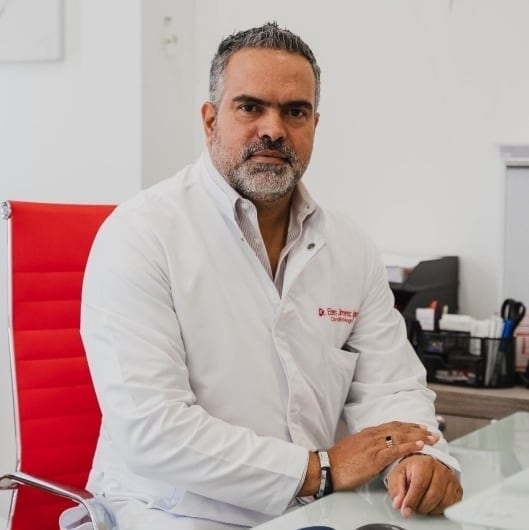
Dr. Elders Jimenez Iglesias
Cardiologist · Nuclear Cardiology
Professional License: 13819257 · Specialty: 12543211
Have questions about your heart health?
Schedule a personalized evaluation with Dr. Jimenez. Board-certified cardiologist with expertise in nuclear cardiology.