
Cardiology is advancing at an unprecedented pace. In 2026, developments in artificial intelligence, wearable devices, minimally invasive procedures, and precision medicine are transforming how we diagnose, treat, and prevent cardiovascular diseases. These advances are not science fiction: many are already available in daily clinical practice, and at Dr. Elders Jimenez Iglesias's office in Cancun, we incorporate the most relevant technologies to offer our patients the best possible care.
Artificial intelligence in cardiology
Artificial intelligence (AI) has established itself as a transformative tool in cardiology. Deep learning algorithms can now analyze electrocardiograms with accuracy that matches or exceeds that of experienced cardiologists in detecting certain conditions. AI can identify subtle ECG patterns that predict atrial fibrillation even when the rhythm is normal sinus, detect left ventricular dysfunction from a 12-lead ECG without the need for an echocardiogram, stratify the risk of cardiovascular events with greater precision than traditional models, and analyze echocardiogram images for automated cardiac function measurements.
Artificial intelligence does not replace the cardiologist but rather enhances diagnostic capability. In our practice, we use these tools as a complement to expert clinical judgment to provide more accurate and timely diagnoses.
Wearable devices for cardiac monitoring
Wearables and portable monitoring devices have revolutionized cardiac follow-up. In 2026, patients have access to technology that previously existed only in hospitals:
- ●FDA-approved smartwatches with single-lead ECG: Apple Watch, Samsung Galaxy Watch, and other devices can record ECG tracings and detect atrial fibrillation
- ●Smart rings with continuous heart rate and rhythm variability monitoring
- ●Extended adhesive cardiac monitoring patches for up to 14 days: more comfortable than traditional Holter and with higher diagnostic yield
- ●Smartphone-connected blood pressure monitors that track trends and send alerts to the physician
- ●Pulse oximeters with integrated arrhythmia detection
Dr. Jimenez can integrate data from these devices into his patients' clinical evaluations, enabling continuous monitoring between appointments and earlier detection of irregularities.
Clinical guideline updates
Major cardiology societies have updated their clinical practice guidelines in key areas:
- ●Heart failure management: the four pharmacological pillars (SGLT2 inhibitor, sacubitril/valsartan, beta-blocker, and mineralocorticoid antagonist) are now recommended for simultaneous initiation in patients with reduced ejection fraction
- ●Atrial fibrillation: greater emphasis on early detection through wearable devices and early initiation of anticoagulation for stroke prevention
- ●Lipid control: new, more aggressive LDL cholesterol targets for very high-risk patients, with broader use of combination therapies
- ●Hypertension: individualization of treatment based on comorbidities and the patient's global cardiovascular risk
- ●Primary prevention: reassessment of aspirin use, with more restrictive indications based on individual risk-benefit profile
New diagnostic technologies
Advances in cardiac imaging and noninvasive diagnostics continue to expand evaluation capabilities:
- ●AI-enhanced echocardiography: automated myocardial strain analysis that detects subclinical dysfunction before ejection fraction decreases
- ●Ultra-low radiation dose cardiac CT: coronary anatomy evaluation without catheterization
- ●Cardiac MRI with reduced acquisition times: myocardial tissue characterization for diagnosing myocarditis, amyloidosis, and other cardiomyopathies
- ●Coronary artery calcium score as a risk stratification tool in primary prevention
Minimally invasive procedures
Interventional cardiology continues to advance toward less invasive procedures with superior outcomes:
- ●Transcatheter aortic valve implantation (TAVI): expanded to intermediate and low-risk patients, with next-generation valves that improve durability and reduce complications
- ●Percutaneous mitral repair: second-generation mitral clip techniques with higher procedural success
- ●Atrial fibrillation ablation with pulsed field electroporation: a new energy source that destroys arrhythmogenic tissue without damaging surrounding structures
- ●Percutaneous left atrial appendage closure: an alternative to chronic anticoagulation in selected patients with atrial fibrillation
- ●Renal denervation for resistant hypertension: growing evidence of its efficacy in patients unresponsive to multiple medications
Pharmacological advances
New medications are expanding therapeutic options in cardiology:
- ●SGLT2 inhibitors: originally for diabetes, now approved for heart failure and kidney protection regardless of diabetes status
- ●Inclisiran: semi-annual injection for LDL cholesterol reduction, ideal for patients with poor adherence to daily statins
- ●Bempedoic acid: alternative for statin intolerance with a favorable safety profile
- ●Finerenone: non-steroidal mineralocorticoid antagonist with cardiorenal benefits in diabetic patients
- ●Direct oral anticoagulants with specific antidotes: greater safety in anticoagulation management
Remote patient monitoring
Telemedicine and remote monitoring have evolved from emergency pandemic solutions to integrated tools in standard cardiology practice. In 2026, remote monitoring systems enable real-time blood pressure tracking with automatic alerts to the cardiologist, transmission of ECGs and implanted device data without needing to visit the office, follow-up video consultations that reduce travel without compromising care quality, and secure communication platforms between patient and medical team for timely treatment adjustments.
Precision medicine in cardiology
The era of precision medicine allows personalization of cardiovascular treatment based on each patient's individual genetic, molecular, and clinical characteristics. Pharmacogenomic testing can predict which patients will respond better to certain medications or have a higher risk of adverse effects. Next-generation biomarkers, such as high-sensitivity troponin and natriuretic peptides, enable earlier diagnoses and more precise risk stratification.
These advances available in our practice
At Dr. Elders Jimenez Iglesias's office at Hospital Galenia, Cancun, we incorporate the most relevant and evidence-based technological advances for daily clinical practice. From interpreting wearable device data to using the most current clinical guidelines, our commitment is to provide cardiac care at the level of the best international centers.
If you want to benefit from the latest cardiology advances applied to your personalized care, schedule your consultation with Dr. Elders Jimenez Iglesias. Call +52 (998) 116-3657 or visit cardiologiacancun.com. The cardiology of the future is available today.
Disclaimer: This article is for informational purposes only and does not replace professional medical consultation. Always consult a qualified cardiologist for diagnosis and treatment of heart conditions.
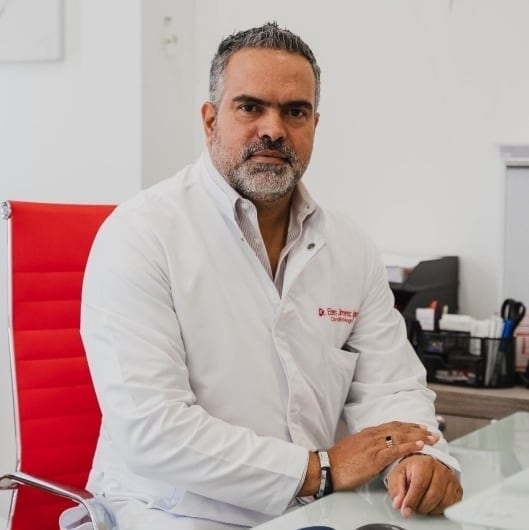
Dr. Elders Jimenez Iglesias
Cardiologist · Nuclear Cardiology
Professional License: 13819257 · Specialty: 12543211
Have questions about your heart health?
Schedule a personalized evaluation with Dr. Jimenez. Board-certified cardiologist with expertise in nuclear cardiology.